Skip to content

Reaching a weight-loss goal can change more than the number on the scale. You may notice a smaller overall shape while still seeing a specific area that feels different. That area may involve softened skin, a localized fat pocket, or uneven texture associated with cellulite.
Book your free consultation at Synergy Wellness and MediSpa.
Body contouring after weight loss is not another weight-loss treatment. It is an individualized process for identifying whether the primary concern is localized fat, cellulite, skin laxity, or a combination. The next step is discussing which options may reasonably address that concern.
At Synergy Wellness and MediSpa, the consultation comes before treatment selection. A physician-led assessment can help clarify what has changed, what a non-surgical option may and may not improve, and whether a plan fits your goals. The distinctions matter because fat, skin, and texture do not respond to the same approach. This broader guide to non-surgical body contouring offers additional context as you consider the changes that can follow weight loss.
Why does weight loss change your body’s shape and skin?
Weight loss can change more than the number on a scale. As body volume decreases, the skin and underlying tissues may not adjust in the same way or at the same pace. Some people notice a smaller overall frame but still see a specific area that feels out of proportion. Others are more concerned with skin that appears less firm, a dimpled texture, or a combination of concerns.
That is why post-weight-loss body contouring is not one single goal. A thoughtful plan starts by identifying what is actually affecting the area you want to improve. Localized fat, cellulite, skin laxity, and overall contour are related, but they are not interchangeable.
- Localized fat: A persistent pocket of fat may remain in one area even when the rest of the body has changed.
- Cellulite: Dimpling and uneven texture can remain a separate concern from the amount of fat present.
- Skin laxity: Skin may look loose or deflated after being stretched, particularly following substantial weight loss.
- Overall contour: The concern may be how several areas relate to one another, rather than one isolated feature.
Why skin elasticity matters
Academic sources on post-weight-loss body contouring explain that skin stretched by substantial weight gain may lose some of its ability to spring back. Johns Hopkins and UCSF describe redundant or deflated skin as a potential concern across areas such as the abdomen, arms, thighs, buttocks, and other parts of the body. The degree of change depends on the individual, including how much the skin was stretched and how it responds over time.
It is important to distinguish that academic discussion from the services described in this article. The cited medical literature focuses on surgical procedures that remove excess skin and tissue, including discussions of panniculectomy and abdominoplasty. Synergy Wellness and MediSpa is not presenting surgical skin removal as a Synergy service. Non-surgical options may be considered for selected concerns, but they should not be described as an equivalent to removing substantial excess skin.
Why one treatment may not address every concern
A treatment designed for a localized fat deposit may not improve cellulite or lax skin to the same degree. Conversely, an approach focused on skin appearance is not automatically a solution for every remaining fat pocket. An individualized evaluation helps separate these goals and determine whether a non-surgical approach is appropriate for the area and concern. Individual results may vary. Not a guarantee.
Which treatments fit body contouring after weight loss?
After weight loss, the remaining concern may be a small area of localized fat, a dimpled cellulite appearance, changes in circumference, or skin that feels less firm. Those concerns can overlap, but they are not interchangeable. A treatment designed to reduce a localized fat deposit may not improve cellulite or lax skin to the same degree. The purpose of an evaluation is to identify the primary concern and set an appropriately limited goal, rather than treating every contour concern as excess fat.
CoolSculpting Elite may be considered when a person has a suitable, localized fat concern. It uses cryolipolysis, or controlled cooling delivered through applicators, to target fat in specified treatment areas. The customer-confirmed areas include the abdomen, thighs, flanks, upper arms, and underneath the buttocks, among others. It is not a weight-loss treatment, and it is not designed to remove loose skin. Results develop over time rather than appearing immediately. So expectations should account for the treatment timeline and the possibility of temporary effects such as swelling, bruising, tenderness, or itching.
VelaShape III may be a better-aligned discussion when cellulite appearance or circumference is the main concern. Its platform combines gentle suction, radiofrequency, infrared light, and massage rollers. That combination is distinct from cryolipolysis. VelaShape III is described as FDA-approved for cellulite reduction and circumference reduction. But approval does not mean a particular person is a candidate or that a specific outcome is guaranteed.
How common post-weight-loss concerns may align with non-surgical options
| Treatment | Best aligned concern | What it does | What it does not promise |
|---|---|---|---|
| CoolSculpting Elite | Selected localized fat | Uses controlled cooling to target fat in specified areas. | It does not promise weight loss, cellulite correction, or removal of loose skin. |
| VelaShape III | Cellulite appearance or circumference concerns | Combines suction, radiofrequency, infrared light, and massage rollers. | It does not promise surgical skin removal or a guaranteed contour change. |
| Skin-focused evaluation | Skin laxity or reduced firmness | Clarifies whether a skin-firming approach, such as Sofwave, may be relevant. | Non-surgical care does not promise removal of substantial excess skin. |
At Synergy Wellness and MediSpa, treatment planning is consultation-based. A physician-led assessment can consider the area, tissue characteristics, medical history, goals, and whether the concern is best addressed with one approach or a more conservative plan. Individual results may vary. Not a guarantee.
How do CoolSculpting, TruSculpt, and VelaShape compare for body contouring after weight loss?
After weight loss, the treatment that makes sense depends on what remains most noticeable. A localized pocket of fat, the appearance of cellulite, and changes in circumference are different concerns. They should not be treated as interchangeable simply because each device is described as a form of body contouring.
Compare body-contouring treatments in more detail, then discuss your goals with a qualified clinician before selecting a modality. A consultation can help determine whether the priority is localized fat, cellulite and circumference, or another concern that calls for a different approach.
CoolSculpting: focused on localized fat
CoolSculpting Elite uses cryolipolysis, or controlled cooling delivered through applicators, to target localized fat. The practice’s documented treatment areas include the thighs, abdomen, flanks, upper arms, underneath the buttocks, and selected areas around the jawline, subject to appropriate candidacy. This makes it relevant when a person has a persistent, pinchable area that does not match the rest of the body’s shape.
CoolSculpting is not a loose-skin treatment, and reducing a localized fat deposit does not necessarily improve cellulite or lax skin to the same degree. Its changes also develop over time rather than appearing immediately. Synergy Wellness and MediSpa describes results as potentially becoming visible one to three months after treatment, with final outcomes taking six months or more in some cases. Those timelines are expectations described for the treatment, not a promise for any individual.
TruSculpt: an option that requires assessment
TruSculpt is named in this comparison as another body-contouring option, but the appropriate choice cannot be determined from the device name alone. Its suitability, treatment plan, and expected outcome require evaluation of the treatment area, tissue characteristics, medical history, and goals. A clinician should explain the relevant technology and whether it is appropriate for your circumstances rather than assuming it is interchangeable with CoolSculpting or VelaShape.
VelaShape: cellulite and circumference concerns
VelaShape III combines gentle suction, radiofrequency energy, infrared light, and massage rollers. Synergy describes it as FDA-approved for cellulite reduction and circumference reduction. That focus differs from CoolSculpting’s documented role in localized fat reduction. A person may be concerned about both fat and cellulite after weight loss, but one treatment should not be presented as automatically addressing every visible change.
For that reason, body contouring after weight loss starts with identifying the treatment target, not choosing the most familiar device. Candidacy and planning require an individualized clinical evaluation. Individual results may vary. Not a guarantee.
Can non-surgical treatments tighten loose skin after weight loss?
Sometimes, a non-surgical treatment may support a firmer-looking appearance when the concern is mild to moderate skin laxity. It is important, however, to separate skin firmness from the removal of substantial excess skin. After significant weight loss, stretched skin may lose elasticity and its ability to spring back. Academic discussions of post-weight-loss body contouring often focus on surgical procedures that remove redundant skin and tissue, which is outside the non-surgical scope of Synergy Wellness and MediSpa. Skin-firming treatment options should therefore be evaluated according to the amount of laxity, the area involved, and your goals.
Synergy documents Sofwave as a non-invasive option that uses precisely delivered ultrasound energy to heat targeted skin layers and stimulate collagen and elastin production. That makes it a skin-focused treatment, not a fat-reduction procedure and not a substitute for surgery. It may be considered when a patient wants to address the appearance of laxity without an operation, but treatment planning must remain individualized. Sofwave should not be presented as removing a hanging apron of skin, correcting every post-weight-loss contour concern, or producing surgical-equivalent results.
This distinction matters in body contouring after weight loss. Localized fat, cellulite, and loose skin are different concerns, and a treatment chosen for one may not improve the others to the same degree. A fat-reduction treatment can address a selected deposit without tightening lax skin. Conversely, a skin-focused technology is not interchangeable with cryolipolysis. A consultation can help determine whether skin laxity is the primary concern or whether another aspect of overall contour is contributing to the appearance you want to change.
What is a realistic expectation?
- Define the concern: Identify whether you are noticing laxity, localized fat, cellulite, or a combination.
- Match the scope: Consider non-surgical care for skin-firming support, not substantial excess-skin removal.
- Plan around your body: Area, skin quality, medical history, and goals all influence candidacy and treatment planning.
- Keep outcomes measured: Discuss what improvement may reasonably look like and when results may be assessed.
Synergy Wellness and MediSpa uses a consultation-based approach to develop a customized plan under physician oversight. Individual results may vary. Not a guarantee.
What happens during a post-weight-loss contouring consultation?
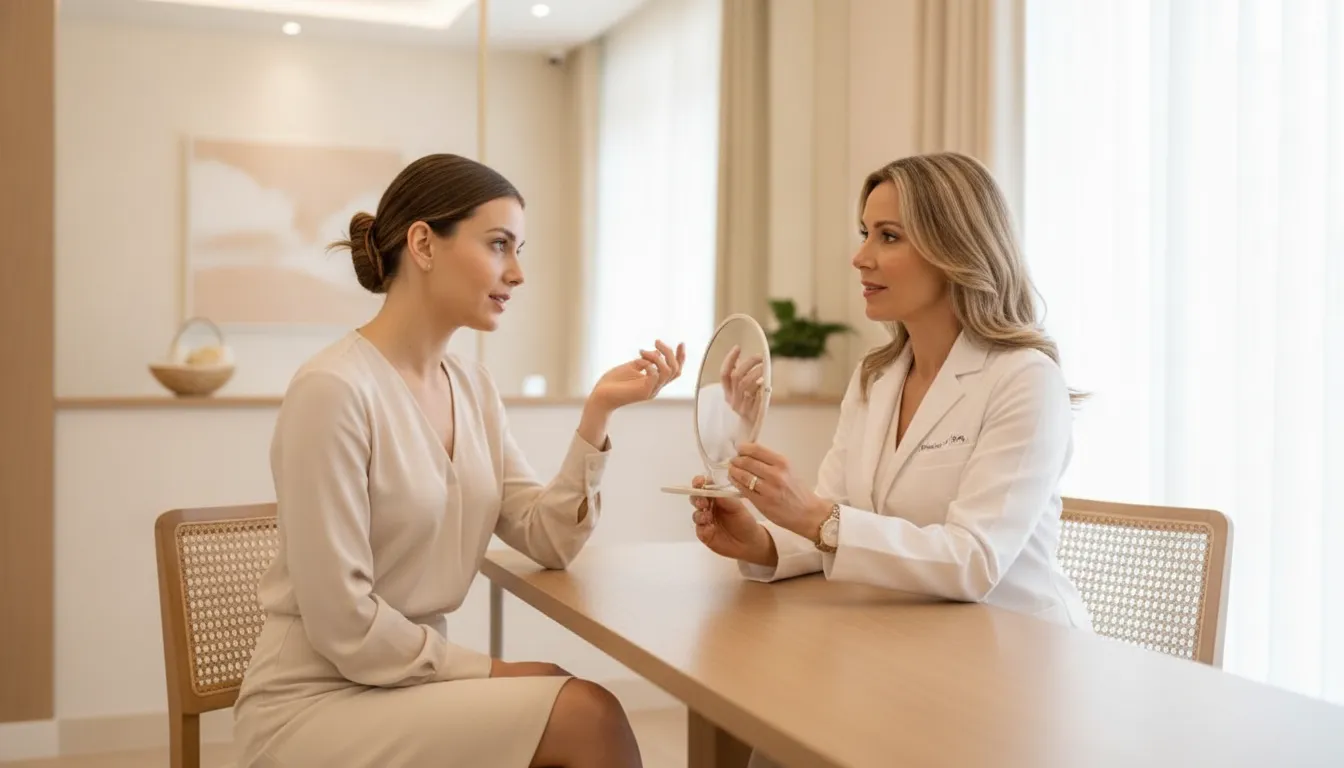
A consultation is a conversation about what changed, what still concerns you, and what kind of improvement is realistic. At Synergy Wellness and MediSpa in Oceanport, NJ, the process is designed to distinguish localized fat, cellulite, skin laxity, and overall shape concerns rather than treating them as interchangeable. A treatment that may address one concern will not necessarily address another, so candidacy and planning require an individualized clinical evaluation.
- Identify your main concern. You will be invited to describe the area or areas that feel out of proportion after weight loss. That may include a persistent localized fullness, uneven contour, cellulite appearance, or skin that feels less firm. Sharing what bothers you most helps keep the discussion focused on your goals instead of on a generic treatment menu.
- Review your weight-loss context and medical history. The provider may discuss how your weight changed, whether it has been stable, any relevant procedures or medications, and your general health history. If your weight loss involved medical care, including a physician-supervised program, you can also review that context. Synergy offers physician-supervised weight management, including prescription options when appropriate, but medication suitability requires medical evaluation and oversight.
- Assess candidacy and treatment limits. The provider will consider whether your goals align with non-surgical contouring and whether a particular technology is appropriate for the concern being discussed. Non-surgical contouring is intended to refine selected areas, not replace weight-loss treatment or remove substantial excess skin. There are no fixed eligibility thresholds that make every visitor a candidate. The assessment is individualized and may also clarify when a concern falls outside Synergy’s non-surgical scope.
- Discuss an individualized plan and expectations. If treatment appears appropriate, the conversation can cover the recommended approach, the areas to address, anticipated timing, possible temporary treatment effects, and what improvement may or may not be visible. The goal is a natural-looking, medically responsible plan, not pressure to choose a procedure. Individual results may vary. Not a guarantee.
This consultation-based approach serves patients in Oceanport and nearby Monmouth County communities who want thoughtful guidance after weight loss. If you would like to discuss your goals, book a free consultation with Synergy Wellness and MediSpa.
Book your free consultation to discuss your post-weight-loss goals.
Frequently Asked Questions
How much does body contouring typically cost after weight loss?
There is no single price because treatment depends on the area being addressed, the concern involved, the technology selected, and the individualized plan. A consultation at Synergy Wellness and MediSpa can clarify candidacy, recommended treatment, and expected investment without assuming that every patient needs the same approach.
Can non-surgical treatments tighten loose skin after weight loss?
Some skin-firming treatments may support a modest improvement in the appearance of laxity, but non-surgical care does not remove substantial excess skin. Sofwave uses targeted ultrasound energy to heat skin layers and stimulate collagen and elastin. Whether it is appropriate depends on your skin, goals, medical history, and assessment.
Is a tummy tuck a good option after weight loss?
A tummy tuck is a surgical procedure that may be considered for certain concerns involving excess abdominal skin and tissue. It is outside Synergy Wellness and MediSpa’s non-surgical scope. If you suspect you need surgical skin removal, discuss your options with a qualified plastic surgeon rather than assuming a non-surgical contouring treatment will provide the same result.
Should I reach a specific weight before scheduling a consultation?
You do not need to assume a fixed weight or timeline before asking questions. During a consultation, the team can discuss whether your weight has been stable, what concern remains, and whether your goals align with non-surgical treatment. Candidacy and treatment planning require an individualized clinical evaluation.
How do I know whether I have loose skin, localized fat, or cellulite?
These concerns can overlap, but they are not interchangeable treatment goals. A localized fat concern may call for a different approach than cellulite or skin laxity. An in-person assessment helps identify the primary concern and choose a plan that is medically appropriate. Individual results may vary. Not a guarantee.
Take the Next Step With an Individualized Plan
A thoughtful consultation can help clarify whether loose skin, localized fat, cellulite, or a combination is shaping your concerns after weight loss. At Synergy Wellness and MediSpa, your goals and candidacy can guide a personalized discussion of appropriate non-surgical options. Book your free consultation to get started.