Skip to content
Chronic pain, muscle stiffness, and joint discomfort can slowly interfere with everyday movement. For many people, these issues develop gradually—an old injury that never fully healed, lingering inflammation, or tight muscles that limit mobility.
Ultra Sound Therapy is a non-invasive treatment often used in rehabilitation and wellness settings to support the healing of soft tissues. At Synergy Wellness and MediSpa, patients exploring treatment options can learn more about Ultra Sound Therapy in Oceanport, NJ and how it may help with a range of musculoskeletal concerns.
What conditions can Ultra sound Therapy treat?
Ultra sound therapy is commonly used to treat muscle pain, joint inflammation, tendon injuries, ligament strains, and soft tissue conditions by improving circulation and supporting tissue healing.
Understanding Ultra sound Therapy
Ultra sound therapy uses sound waves at frequencies higher than the human ear can hear. These sound waves are delivered through a handheld device that moves gently across the skin in targeted areas. Although it shares a name with diagnostic ultrasound used in imaging, therapeutic ultrasound works differently. Instead of producing images, it delivers energy into tissues beneath the skin to support healing and reduce discomfort.
The therapy is commonly used in physical therapy, rehabilitation programs, and wellness settings to address muscle strains, tendon inflammation, joint stiffness, scar tissue, and ligament injuries. Many people seek treatment when they experience lingering pain that has not responded well to rest or basic home care. Over time, ultrasound therapy has become a widely used option for supporting recovery from both acute injuries and chronic musculoskeletal conditions.
How Ultrasound Therapy Works
The technology behind Ultrasound Therapy is based on sound wave energy. These waves travel through the skin and into deeper tissues, where they create gentle vibrations and heat. During treatment, a provider applies a conductive gel to the skin. This gel helps the sound waves move efficiently into the tissue while also allowing the device to glide smoothly.
The treatment process typically includes several effects within the body:
Deep Tissue Heating
The sound waves generate heat in deeper layers of muscle and connective tissue. This can help improve flexibility and reduce stiffness.
Improved Circulation
Therapeutic ultrasound may increase blood flow to the treated area, which supports tissue repair.
Cellular Stimulation
The vibration from the sound waves may encourage cellular activity involved in healing.
Reduced Inflammation
By improving circulation and tissue mobility, the therapy may help reduce inflammation associated with injuries.
Most sessions are relatively short, often lasting between 5 and 15 minutes,tes depending on the treatment area.
Conditions Commonly Treated With Ultrasound Therapy
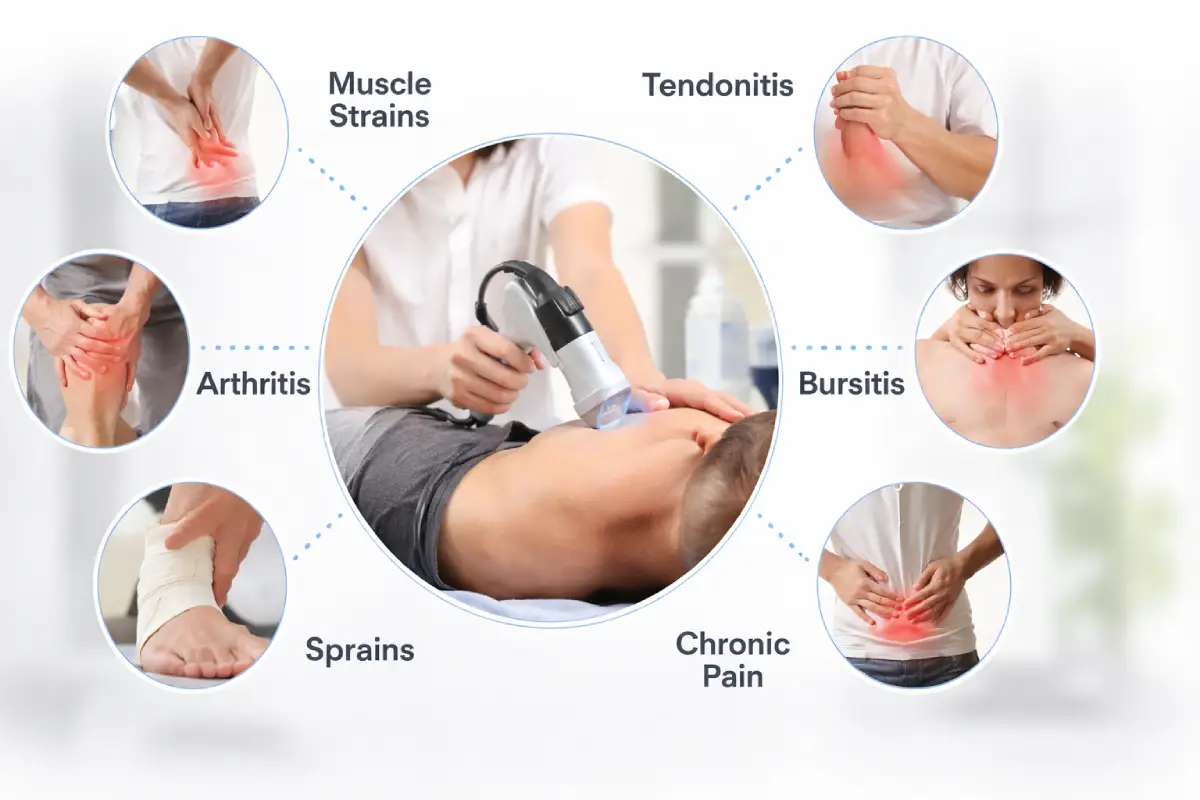
Many patients ask which conditions respond well to Ultrasound Therapy. The treatment is commonly used for soft tissue problems affecting muscles, tendons, ligaments, and joints.
Muscle Strains
Muscle strains occur when muscle fibers are overstretched or torn. This may happen during sports, exercise, or sudden movement. Ultrasound therapy can help improve circulation in the affected area, which may support the healing process and reduce discomfort.
Tendonitis
Tendonitis involves inflammation of the tendons, often caused by repetitive movement. Common examples include tennis elbow, Achilles tendonitis, and shoulder tendon inflammation.
Therapeutic ultrasound is frequently used in rehabilitation programs to help improve tissue flexibility and reduce irritation.
Ligament Injuries
Ligaments connect bones and stabilize joints. When they become overstretched or torn, the healing process can take time.
Ultrasound therapy may be used alongside other treatments to support tissue repair and reduce stiffness.
Joint Pain and Stiffness
Conditions such as arthritis or previous injuries can lead to chronic joint pain. In some cases, therapeutic ultrasound may help improve mobility by warming surrounding tissues.
Scar Tissue
After an injury or surgery, scar tissue can form in muscles or connective tissue. This may restrict movement or cause discomfort.
The vibration created by ultrasound waves may help soften scar tissue and improve mobility in affected areas.
Chronic Pain Conditions
People dealing with long-term muscle or joint pain sometimes use ultrasound therapy as part of a broader pain management plan.
This is where many patients begin to notice the benefits of ultrasound therapy, particularly when combined with stretching, strengthening exercises, or other supportive treatments.
Ultra Sound Therapy Benefits That Matter in Recovery
Many patients choose this treatment because it offers several practical advantages when managing pain or recovering from injury.
Non-Invasive Treatment Ultrasound Therapy does not involve surgery or injections. The treatment is performed externally using a handheld device.
Supports Tissue Healing
The energy of sound waves encourages circulation and cellular activity that may support recovery.
Helps Improve Flexibility
By gently warming tissues, ultrasound therapy can help reduce stiffness and improve range of motion.
May Reduce Pain and Inflammation
Many patients report reduced discomfort following treatment sessions, especially when therapy is part of a broader rehabilitation plan.
Short Treatment Sessions
Sessions are typically brief, making them convenient for people with busy schedules.
The benefits of ultra sound therapy make the treatment a valuable addition to many rehabilitation and wellness programs.
Helpful Common Questions
Is Ultra Sound Therapy painful?
Most patients feel little to no discomfort during treatment. Some notice a gentle warming sensation in the treated area.
How many sessions are needed?
The number of sessions depends on the condition being treated and the severity of symptoms.
Is there downtime after treatment?
Ultra Sound Therapy typically requires no downtime. Many patients resume normal activities shortly after a session.
Can it be used for sports injuries?
Yes. The therapy is often used for muscle strains, tendon issues, and other sports-related injuries.
How quickly will results appear?
Some patients notice relief after a few sessions, while others experience gradual improvement as healing progresses.
Supporting Recovery With Ultra Sound Therapy
Pain and stiffness can make everyday movement more difficult, especially when injuries linger or inflammation persists. Treatments that support tissue healing and improve mobility can play an important role in recovery. At Synergy Wellness and MediSpa, patients interested in Ultra Sound Therapy in Oceanport, NJ can receive guidance on whether this treatment is right for their needs. We Would Love To Hear From You. A conversation with a qualified provider can help determine whether Ultra Sound is on your path toward improved comfort and mobility.