Skip to content

Botox vs fillers is one of the most common questions patients ask when they begin exploring facial rejuvenation. The short answer is that Botox and dermal fillers address different causes of facial aging: Botox temporarily reduces targeted muscle activity, while fillers restore or shape volume beneath the skin. The right starting point depends on your anatomy, expressions, goals, medical history, and comfort with treatment.
Book Now to discuss a personalized injectables plan with an experienced medical team. Consultations are free.
Prefer online scheduling? Use Synergy Wellness and MediSpa’s online booking portal.
At Synergy Wellness and MediSpa in Oceanport, Danielle D’Alessio, PA-C, brings recognition as a Top 5% Injector nationwide and a Master Aesthetic Injection Specialist to the conversation. That expertise matters because facial rejuvenation is not a one-size-fits-all menu. It is a careful process of deciding what to treat, what to leave alone, and how to preserve natural movement and proportion.
Botox vs fillers: What is the difference?
Botox is a prescription neuromodulator that temporarily relaxes selected muscles responsible for expression-related lines. Dermal fillers are injectable gels or biostimulators used to restore volume, soften folds, or refine facial contours. Botox changes muscle activity; fillers add support or stimulate gradual volume. They can be alternatives for some concerns and complementary treatments for others.
| Question | Botox | Dermal fillers |
|---|---|---|
| Primary job | Reduce the appearance of dynamic lines caused by repeated muscle movement | Restore volume, soften folds, or refine shape and contour |
| How it works | Temporarily reduces targeted muscle activity | Adds volume beneath the skin or supports a gradual collagen response, depending on the product |
| Common goals | Forehead lines, frown lines, and crow’s feet | Lips, cheeks, facial folds, chin, jawline, under-eye hollows, or hands when appropriate |
| When results develop | Usually develops over several days and continues to settle | Some products provide immediate volume, while biostimulators develop gradually |
| How long results last | Varies by product, treatment area, dose, and individual response | Varies widely by product, placement, metabolism, treatment area, and individual response |
The comparison is useful, but it is not a substitute for an assessment. Two people with similar lines may need different approaches because one person’s concern is primarily muscle movement while the other’s is volume loss, skin laxity, or a change in facial proportion.
How does Botox work for facial lines?
Botox and similar neuromodulators work by temporarily reducing the muscle activity that contributes to selected expression lines. When the treated muscle moves less, the overlying skin may look smoother. The goal is not to erase personality or freeze every expression. A skilled injector selects treatment points and an amount that support the patient’s aesthetic goals.
What areas can Botox address?
Synergy Wellness and MediSpa’s injectables service describes Botox for dynamic forehead lines, frown or glabellar lines, and other unwanted muscle activity. Dysport and Xeomin are additional neuromodulator options in the practice’s portfolio. Product selection is not a contest with one universal winner. The best choice depends on the area, muscle pattern, desired degree of movement, prior treatment history, and the provider’s evaluation.
Patients often notice that the same facial movement can create very different patterns from one person to another. One person may have strong frown muscles, while another may be more concerned about forehead movement or the outer corners of the eyes. This is why a consultation should focus on facial anatomy and goals rather than a fixed number of units.
Read Synergy Wellness and MediSpa’s Botox treatment guide for a treatment-specific overview. This comparison article intentionally stays at the decision-making level so the Botox guide can cover preparation, treatment questions, and other details in greater depth.
How do dermal fillers restore facial volume?
Dermal fillers are designed to create a smoother or fuller appearance by adding support beneath the skin. Many commonly used facial fillers contain hyaluronic acid, a substance naturally found in the body. Other injectables, such as Sculptra, work as biostimulators and encourage a gradual collagen response. Placement, product properties, and the amount used all affect the result.
At Synergy Wellness and MediSpa, the filler portfolio includes JUVEDERM, Restylane, and Belotero products, along with Sculptra. Depending on the product and medical assessment, fillers may be considered for lips, cheeks, nasolabial folds, marionette lines, chin, jawline, temples, hands, or other appropriate areas. The objective should be proportion and support, not simply adding as much volume as possible.
What concerns may respond to filler?
- Loss of cheek or midface volume
- Fine lines or folds where added support may be appropriate
- Lips that have lost volume or definition
- Chin or jawline proportions that may benefit from subtle contouring
- Hollow areas that need a careful, individualized assessment
- Hand volume loss in appropriate candidates and with an appropriate product
Dermal fillers are medical treatments, not ordinary skincare. The U.S. Food and Drug Administration explains that fillers are regulated medical devices and that most approved filler effects are temporary because the body eventually breaks down and absorbs the material. The FDA also recommends working with a licensed provider who understands facial anatomy, injection technique, and complication management. Review the FDA’s dermal filler safety guidance before treatment.
Synergy Wellness and MediSpa’s dermal fillers guide provides a broader introduction to filler treatments. The right product is chosen after considering the patient’s facial structure, tissue quality, goals, past procedures, and medical history.
Which is better for looking younger, fillers or Botox?
Neither Botox nor fillers is universally better for looking younger. Botox may be the better match for lines that appear or deepen with muscle movement, while filler may be considered when volume loss, folds, or contour changes are the main concern. Some patients need one treatment, some need a staged plan, and some are better served by a different option.
Natural-looking facial rejuvenation begins with identifying the visual cause of a concern. A line can be related to movement, volume, skin texture, laxity, or several factors at once. Treating the wrong cause can produce an underwhelming result or create an appearance that does not feel like you. A conservative consultation helps define the priority instead of chasing every visible line.
How an injector thinks through the difference
- Observe the face at rest. The provider looks at volume, symmetry, skin quality, folds, and proportion.
- Observe natural expression. The provider evaluates which lines are created or deepened by movement.
- Clarify the patient’s goal. Softening a tired look is different from adding lip definition or creating more cheek support.
- Prioritize the smallest useful change. A plan may begin with one area rather than treating every possible concern at once.
- Discuss timing and maintenance. The patient should understand that results, follow-up, and longevity vary.
This approach aligns with Synergy Wellness and MediSpa’s stated injector philosophy: listen carefully, avoid overtreatment, and favor natural-looking outcomes. Individual results may vary. Not a guarantee.
Can Botox and fillers be used together?
Botox and fillers may be used in the same overall facial rejuvenation plan when a qualified medical provider determines that both address separate concerns. Botox can be used for selected movement-related lines, while filler can address volume or contour. Combining treatments is not automatically better, and the sequence, treatment areas, timing, and safety discussion should be individualized.
A physician-led practice can also help patients decide whether to stage treatments rather than do everything in one visit. Staging may make it easier to evaluate one change before adding another. It can also keep the plan aligned with the patient’s priorities and reduce the temptation to overcorrect a concern that may improve once the first treatment settles.
At Synergy Wellness and MediSpa, prescription injectables are evaluated and planned with medical-director oversight. The practice’s three Medical Directors provide clinical supervision for prescription treatments, while Danielle D’Alessio, PA-C, and the aesthetic nursing team perform treatments within their training and delegated scope.
Considering a combination plan? Book Now before deciding which treatment to book.
What should I expect at an injectables consultation?
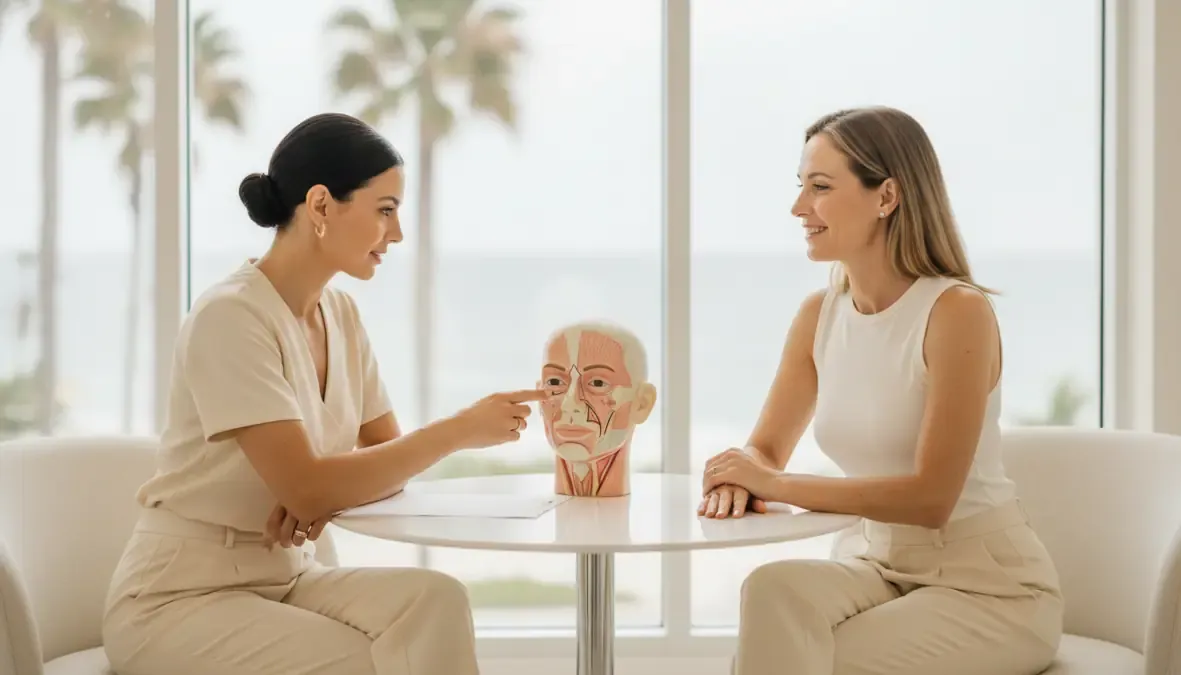
An injectables consultation should be a two-way medical conversation, not a quick product selection. The provider reviews your goals, medical history, medications, allergies, previous aesthetic treatments, and the way your face moves. You should leave with a clear explanation of appropriate options, expected timing, relevant risks, and what the provider recommends waiting on.
Questions worth asking your injector
- Is my concern primarily related to muscle movement, volume loss, skin quality, laxity, or a combination?
- Which product or treatment category are you recommending, and why?
- What result is realistic for my anatomy and goal?
- How much movement or volume will remain?
- What is the expected settling period and what follow-up is available?
- What common and uncommon risks should I understand before treatment?
- Would a staged plan be more appropriate than combining treatments today?
- What other treatment should I consider if Botox or filler is not the best first step?
Bring a list of current medications and supplements, a history of allergies or bleeding problems, and details about any recent dental, surgical, or cosmetic procedures. Do not assume that a treatment is appropriate because it was appropriate for a friend, a social media personality, or a previous version of your face.
Who may be a candidate, and who should wait?
Potential candidates are adults seeking a specific, realistic aesthetic goal who are healthy enough for the proposed treatment and willing to discuss their medical history honestly. Candidacy is not determined by age alone. A provider may recommend treatment, modification, delay, or no treatment depending on medications, allergies, pregnancy or lactation status, active skin conditions, infection, healing concerns, bleeding risk, and the treatment area.
Tell the medical team about blood-thinning medications or supplements, neuromuscular conditions, prior reactions, dental work, recent procedures, and any history of filler or toxin complications. Never stop a prescribed medication on your own. The treating medical team can explain what information is relevant and whether coordination with another clinician is needed.
Botox and fillers also have different risk profiles. Bruising, swelling, tenderness, redness, and temporary asymmetry can occur after injections. Botulinum toxin products may be associated with effects such as eyelid or brow drooping. Filler injections carry risks that include swelling, lumps, asymmetry, and rare but serious vascular complications. The provider should explain risks, alternatives, aftercare, and when to contact the practice. Seek urgent medical attention for severe or unusual symptoms such as vision changes, difficulty breathing or swallowing, or rapidly worsening pain or skin color changes.
Medical evaluation is essential. Online education can help you form better questions, but it cannot establish candidacy, prescribe treatment, or replace an examination.
What results and recovery should I expect?
Results and recovery depend on the product, treatment area, injection technique, dose, individual healing, and the goal being addressed. Neuromodulator changes develop as muscle activity decreases. Some fillers create visible volume soon after treatment, while swelling can temporarily obscure the final appearance. Biostimulators such as Sculptra are designed for a gradual response rather than an instant correction.
Most patients should plan for some possibility of temporary redness, swelling, tenderness, or bruising. Your provider may give specific instructions about exercise, pressure on the area, skincare, makeup, heat, and follow-up. These instructions are more important than generic advice because they account for what was actually treated.
Ask when the practice wants to see you again and how it evaluates the result. A thoughtful injector does not promise a perfect outcome or insist that every concern needs another syringe or another area of treatment. The goal is a result that fits your face and your life, with a maintenance plan that remains optional and individualized.
What other facial rejuvenation options may fit?
Botox and fillers are not the only ways to address facial aging. Depending on the concern, a provider may discuss collagen stimulation, minimally invasive lifting, laser resurfacing, skin tightening, medical-grade skincare, or a combination of approaches. The best plan may focus on skin quality or structure rather than adding volume.
Synergy Wellness and MediSpa offers several options that can be evaluated alongside injectables. Sculptra in Oceanport is a gradual collagen-stimulating injectable with a different treatment philosophy from a traditional hyaluronic acid filler. MINT PDO threads are a minimally invasive lifting option that may be considered for selected concerns. Skin-focused treatments can also be part of a plan when texture, pigmentation, or laxity is a higher priority than wrinkles caused by movement.
These options should not be treated as interchangeable. A good consultation explains what each treatment can and cannot do, what it will not address, and whether a staged plan is more sensible than combining procedures.
Ready to explore your options? Book Now at Synergy Wellness and MediSpa in Oceanport, serving patients from nearby Red Bank, Rumson, Little Silver, Shrewsbury, and Eatontown.
Frequently asked questions about Botox vs fillers
Botox and fillers are both injectable treatments, but they solve different problems. These common questions can help you prepare for a more productive consultation. A medical provider must still determine whether a treatment is appropriate for your health, anatomy, and goals.
Is Botox a filler?
No. Botox is a prescription neuromodulator that temporarily reduces selected muscle activity. Dermal fillers are injectable materials used to add support or fullness beneath the skin. They have different mechanisms, uses, risks, and treatment planning considerations.
Which is better for jowls, Botox or fillers?
There is no universal answer. Jowls may relate to volume distribution, skin laxity, bone structure, muscle activity, or more than one factor. A provider may discuss filler, threads, skin tightening, or another approach after examining the face. Do not choose a treatment based on the word jowls alone.
Which lasts longer, Botox or fillers?
Duration varies by product, treatment area, dose, metabolism, facial movement, and individual response. Many fillers last longer than a typical neuromodulator treatment, but that does not make filler the better choice. The right product is the one that addresses the actual concern safely and appropriately.
Can I get Botox and filler on the same day?
Some patients may be candidates for treatment in the same visit, while others may benefit from staging. The decision depends on the areas involved, medical history, prior treatment, the provider’s plan, and the patient’s preferences. A consultation should come before scheduling a combination appointment.
What is the safest injectable for facial rejuvenation?
Safety depends on the product, treatment area, patient, injector, technique, and medical oversight. No injectable is automatically safest for everyone. Choose a licensed medical provider who evaluates candidacy, explains risks and alternatives, uses appropriate products, and has a plan for follow-up and complication management.
How do I choose between Botox and fillers in New Jersey?
Start with an in-person consultation at a qualified medical practice rather than selecting a product from a menu. At Synergy Wellness and MediSpa in Oceanport, the team can review your goals and discuss whether Botox, a filler, another facial rejuvenation treatment, or no treatment is the most appropriate next step.
Start with an individualized plan
The difference between Botox and fillers is straightforward in principle: Botox addresses selected muscle activity, while fillers restore or shape volume. The difficult part is determining what your face actually needs and how much treatment is appropriate. A conservative, consultation-first plan can help you make an informed decision without committing to more than your goals require.
Book Now to begin the conversation with Synergy Wellness and MediSpa.
Medical information is for education only and is not a diagnosis or treatment recommendation. Prescription treatments require medical evaluation and individualized planning. Individual results may vary. Not a guarantee.